




The Territory
Le Marche
Defined by Guido Piovene as “the only Italian region in the plural” and also “Italy in one region” (alluding to the thousand environmental, landscape and artistic realities) and “The country of the Dolci Colli” by Cecco D’Ascoli.
Marche is a region to be discovered and experienced.
A multifaceted reality that forms a real territorial mosaic: from the sea, with soft and sunny beaches of San Benedetto del Tronto and Grottammare to the green hills, up to the majestic and magical chain of the Sibillini Mountains, without forgetting the many ancient villages and cities of art and history (such as Acquasanta Terme, Loreto, Macerata) which have the flavor of remote times and events, national parks, reserves natural sites, sacred places and new shopping realities.
Ascoli Piceno
CITY OF A HUNDRED TOWERSThe historic center of Ascoli Piceno is almost entirely built of travertine and is among the most admired in the region and in Central Italy, thanks to its artistic and architectural richness.
Ascoli Piceno is known as the “City of a Hundred Towers” because it preserves numerous noble and bell towers.
Of great importance—not only historically and artistically but also from an urban planning perspective—is the Renaissance Piazza del Popolo, considered one of the most beautiful squares in Italy.
Ascoli Piceno is also a bishopric. The industrial area is mainly located in the lower valley of the Tronto River.
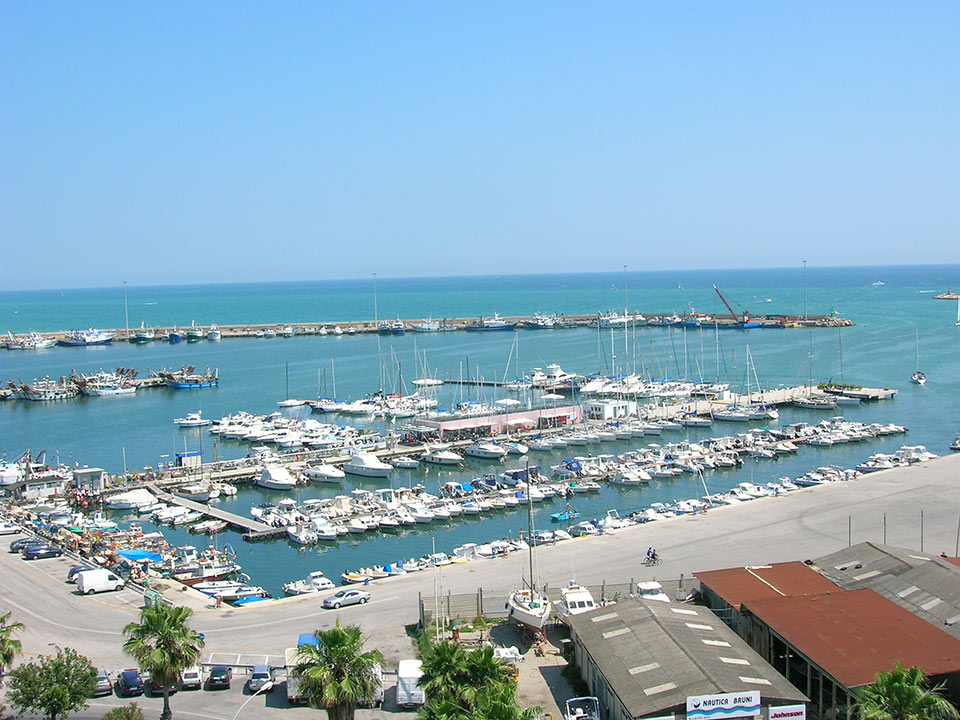
San Benedetto del Tronto
PALM RIVIERANature has been particularly benevolent with San Benedetto del Tronto, where then the commitment and the hand of man have been able to enhance the goods that this land has given, offering a landscape definitely perfect for all seasons, especially those sunny and warm because with its avenues of the promenade, the city takes on a purely exotic appearance.
In San Benedetto del Tronto, there are more than 7,000 palm trees that seem to embrace the air, the people who walk there, the birds that fly there.
These large palms are interspersed with oleanders on the fragrant avenues with enchanting floral and marine fragrances. Even the smell of food reaches the senses. This city is unique in Europe.
Offida
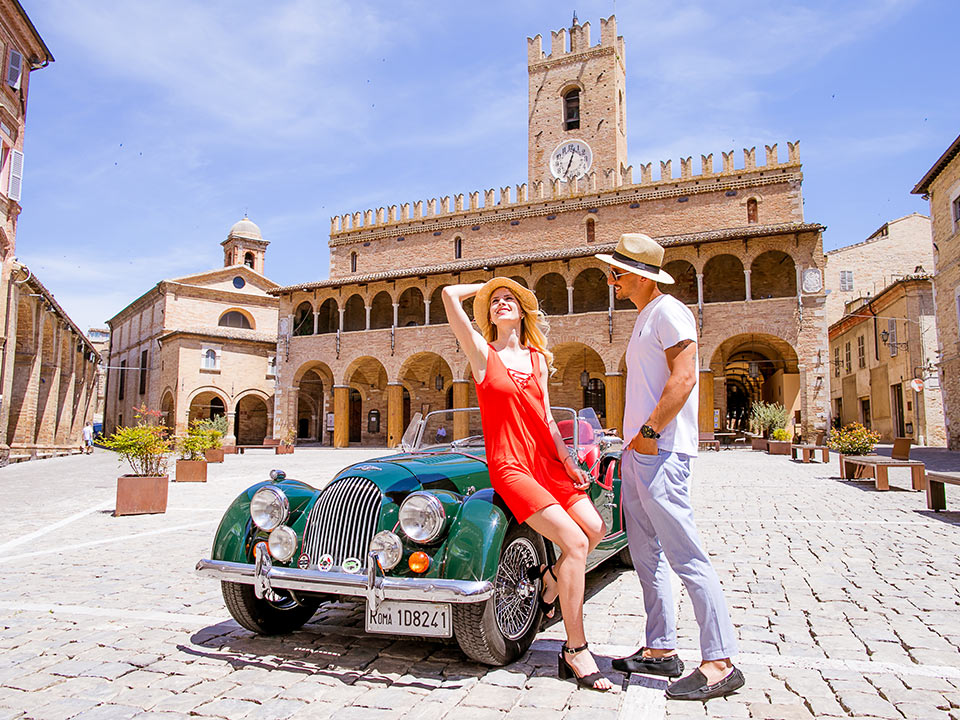
VILLAGE OF LACE AND WINEThe heart of the city is represented by the Piazza del Popolo, which overlooks the beautiful Palazzo Comunale, made of terracotta, and La Collegiata, an eighteenth-century church with three naves, rich in precious paintings and stucco.
Of particular interest is the Templar Church of Santa Maria della Rocca which stands imposing on a small hill in a solitary and majestic place.
It is a magnificent Romanesque-Gothic church with a single nave, made of terracotta and rebuilt in 1330 on the same site where there was a small church of the year 1000. Offida has been, for centuries, one of the three most important centers in the world for the art of lace-making.
Still today, wandering through the alleys of the ancient village, you can come across women offidane who, sitting at the doorstep, work on the tombolo precious lace.
Offida hosts among the evocative rooms of the former Convent of San Francesco “L’Enoteca regionale”, a lively and dynamic center of initiatives related to wine.
Ripatransone
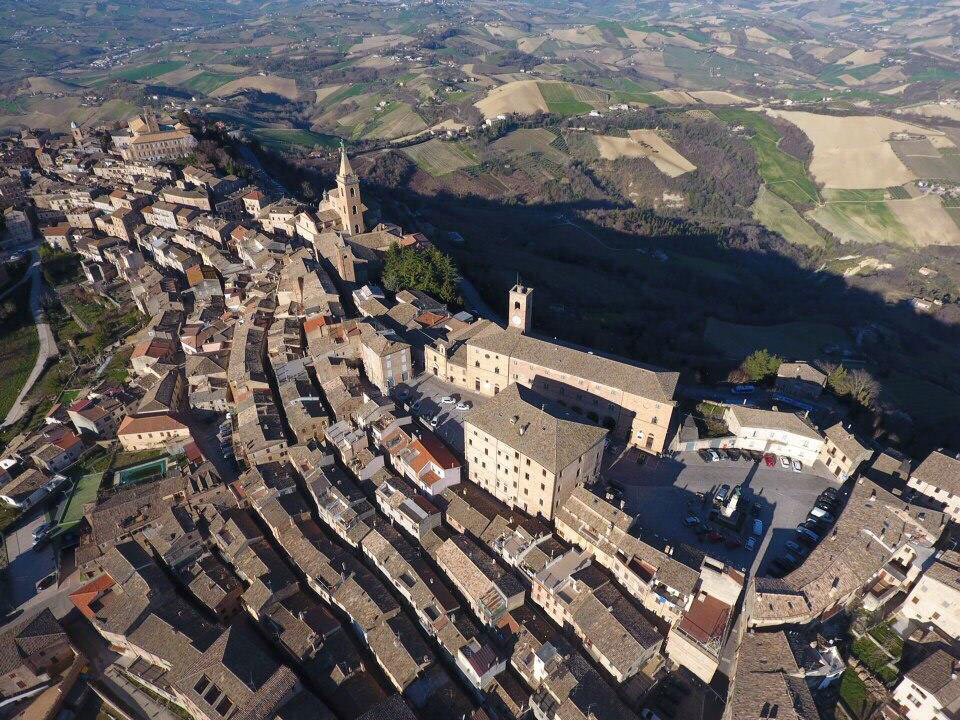
CITY OF OIL AND WINEDefined as a city of oil and wine, it is a charming historic village, characterized by the warm shade of brick.
It is famous for its views and medieval views, including the narrowest alley in Italy, a real hole of 43 cm closed between 2 houses.
To visit: the Cathedral Basilica, the Palazzo del Podestà, the Teatro Mercantini, the Municipal Art Gallery and the Museum of Rural Life.